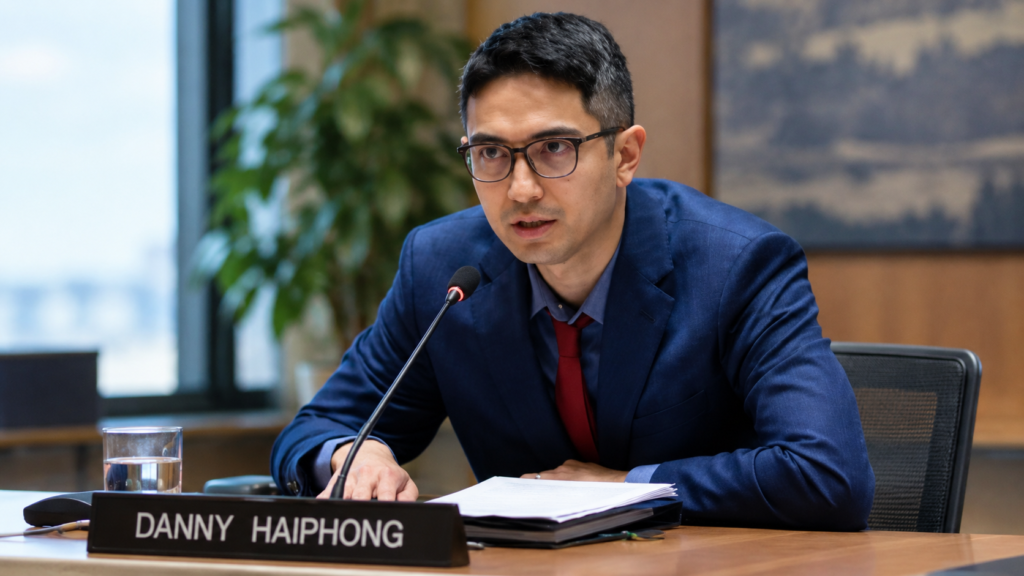

People searching for “danny haiphong wikipedia” are generally looking for a straightforward biography of Danny Haiphong, including his background, journalism career, political commentary, books, and independent media work. He has built a public profile through political writing, interviews, digital journalism, and The Left Lens, a program focused heavily on geopolitics and international affairs. Common Dreams identifies him as an activist and journalist and notes his co-authorship of American Exceptionalism and American Innocence with Roberto Sirvent.
Unlike some well-known television personalities, Haiphong’s career has developed largely through independent media. As a result, information about him is spread across author profiles, interviews, publications, and online media rather than being concentrated in one traditional celebrity biography. Looking at those sources provides a clearer picture of his professional journey and the subjects that have made him a recognizable political commentator.
Who Is Danny Haiphong?
Danny Haiphong is an American journalist, writer, political analyst, activist, and independent media personality. His work is particularly associated with political and geopolitical commentary, including discussions about U.S. foreign policy, capitalism, socialism, international relations, China, Russia, and the Global South.
His professional identity has developed around long-form political discussion rather than conventional breaking-news reporting. He frequently examines current events alongside historical and economic issues, giving his audience a broader framework for understanding political developments. Author profiles describe him as an independent journalist and host of The Left Lens.
For anyone researching “danny haiphong wikipedia,” this combination of journalism and independent media is important because it explains why his name appears across different political publications, podcasts, interviews, and video platforms.
Early Life and Personal Background
Haiphong has spoken about his upbringing and personal experiences in interviews, although many details of his private life remain relatively limited in reliable public sources. In a Hampton Institute interview, he discussed growing up in a working-class environment and explained some of the experiences that influenced his understanding of race, class, politics, and economic inequality.
His family background has also been discussed publicly. Haiphong described his father as a white federal-government union worker and his mother as Vietnamese. He connected some of his childhood experiences with the questions about identity, racism, class, and social inequality that later became important subjects in his political writing.
These experiences provide context for his later interest in political organizing and journalism. Rather than entering political commentary from a purely academic background, his public discussions frequently connect political ideas with personal observations and wider historical developments.
Danny Haiphong’s Journalism Career
Journalism has been central to Haiphong’s public career. He has contributed to a number of independent and progressive publications, writing about U.S. politics, foreign policy, economics, race, war, and international relations.
His author profiles show contributions to publications including Black Agenda Report, MintPress News, CounterPunch, and other political outlets. LA Progressive describes him as a socialist activist, writer, and political analyst and lists numerous articles covering subjects ranging from U.S. imperialism and capitalism to China, racism, and international politics.
This range of subjects demonstrates the broad nature of his journalism. Instead of concentrating on one narrow political topic, Haiphong has repeatedly explored how domestic politics, economics, race, military policy, and international affairs intersect.
Connection With Black Agenda Report
Black Agenda Report has been an important part of Haiphong’s professional history. Several author biographies identify him as a contributor or contributing editor, and his articles have addressed topics including race, capitalism, U.S. foreign policy, and international affairs.
His connection with the publication helped establish his reputation within independent political journalism. It also gave him a platform for developing arguments that later appeared in his books, interviews, and video commentary.
His work has also appeared through other independent publications. An author profile on ACrO-Pólis, for example, describes him as a socialist activist, writer, and political analyst and notes his collaborations with Black Agenda Report and other publications.
The Left Lens
One of the most recognizable parts of Haiphong’s modern media career is The Left Lens. The program has become an important platform for his interviews and political analysis, allowing him to discuss international affairs in much greater depth than a short television segment would normally allow.
His media work covers topics such as U.S. foreign policy, China, Russia, international conflicts, socialism, imperialism, and changes in the global balance of power. His online presence has also allowed him to interview journalists, academics, activists, and other political commentators.
His official social-media profile describes his work as journalism focused on imperialism and socialism and lists The Left Lens among his major platforms.
Danny Haiphong as a Writer and Author
Another major part of Haiphong’s career is his work as an author. He co-wrote American Exceptionalism and American Innocence: A People’s History of Fake News—From the Revolutionary War to the War on Terror with Roberto Sirvent.
The book examines American history and challenges conventional narratives surrounding American exceptionalism. It explores subjects such as race, political power, war, capitalism, media narratives, and U.S. foreign policy.
The book is especially relevant when studying Haiphong’s broader body of work because many of the themes in the publication continue to appear in his later journalism and political commentary. His approach generally attempts to place current political events within a longer historical context rather than treating each event as completely separate.
Political Views and Commentary
Haiphong is generally associated with socialist and anti-imperialist political ideas. His writing and interviews frequently criticize U.S. foreign policy, military intervention, capitalism, and what he considers dominant or misleading narratives about international politics.
His political perspective is important to understand when reading his journalism because his work is openly analytical and argumentative rather than politically neutral reporting. He often examines international events from the perspective of anti-imperialism, class politics, and changes in global power.
His commentary frequently includes China, Russia, the Global South, and the idea of a multipolar international system. A podcast appearance with Guerrilla History, for example, featured Haiphong discussing U.S. imperialism, Russia-U.S. tensions, and anti-imperialist politics.
Readers should distinguish between Haiphong’s stated political opinions and independently verified facts. His work represents a particular political perspective, and understanding that perspective helps explain both his audience and the debates surrounding his commentary.
Topics Covered by Danny Haiphong
Haiphong has written and spoken about a wide variety of subjects. Some of the most recurring areas include:
- U.S. foreign policy
- China-U.S. relations
- Russia and international politics
- Socialism and capitalism
- Imperialism and military intervention
- Racism and economic inequality
- Global political power
- The Global South
- International conflicts
- Media and political narratives
His article archive demonstrates how broad this range is. His published work has addressed subjects from U.S. imperialism and capitalism to China, racism, political movements, and international relations.
Media Interviews and Public Appearances
In addition to writing, Haiphong has appeared on podcasts, political programs, and independent media channels. These appearances have helped him reach audiences who may not regularly read political publications.
His long-form interviews often allow him to develop an argument over an extended period. Instead of focusing only on a headline or individual political statement, he tends to connect current developments with history, economics, and international relations.
This approach has become an important part of his public identity. It also explains why people looking for “danny haiphong wikipedia” may encounter information across podcasts, YouTube programs, author pages, and independent political publications.
What Is Known About His Private Life?
There is substantially more publicly documented information about Haiphong’s professional career than his private life. His journalism, political work, books, and media appearances are well represented in public sources, while information about relationships, children, finances, and other personal matters is much less consistently documented.
Some biography websites publish specific claims about his age, birthday, family, or other personal details, but those claims should not automatically be accepted without reliable supporting evidence. A responsible biography should separate confirmed professional information from details that remain uncertain.
This is particularly important for readers using “danny haiphong wikipedia” as a research query because search results can combine established facts with unsourced biography claims.
Why Are People Searching for Danny Haiphong Wikipedia?
The phrase “danny haiphong wikipedia” reflects the way people commonly search for information about public figures. A Wikipedia-style search usually means the reader wants a quick overview covering a person’s identity, profession, background, achievements, and public work.
In Haiphong’s case, the interest is also connected to the growth of independent political media. His work reaches audiences through articles, podcasts, interviews, and video content rather than only through traditional newspapers or television networks.
Because his career covers several areas, a complete biography needs to explain his journalism, writing, political analysis, and digital media work together. Looking at these parts as a whole gives a much clearer understanding of why his name has become familiar to followers of independent political commentary.
Danny Haiphong’s Influence in Independent Media
Haiphong’s career reflects the changing nature of journalism in the digital era. Independent commentators can now build audiences through YouTube, podcasts, newsletters, livestreams, and social-media platforms without depending entirely on traditional media organizations.
His career demonstrates this transition particularly well. He has combined written journalism with video discussions and interviews, allowing him to communicate directly with an international audience interested in political and geopolitical issues.
His continuing work on international affairs has also kept him connected with a wide network of journalists, activists, researchers, and political commentators. Geopolitical Economy Report describes him as an independent journalist and host of The Left Lens.
What Makes Danny Haiphong’s Work Different?
One notable feature of Haiphong’s work is his effort to connect individual news events with larger political and historical patterns. When discussing international conflicts or changes in global politics, he often examines the economic and historical forces that he believes influence those developments.
This approach appeals to readers and viewers who want more than a short summary of current events. At the same time, because his commentary is shaped by a clearly stated political perspective, audiences should consider his analysis alongside other sources when researching controversial subjects.
That distinction is especially valuable for anyone using the keyword “danny haiphong wikipedia” to conduct general research. A biography can explain who he is and what he believes without presenting every political argument as an established fact.
Conclusion
Danny Haiphong has established himself as an independent journalist, writer, political analyst, and media personality whose work focuses heavily on politics and international affairs. His career includes contributions to independent publications, work associated with Black Agenda Report, the book American Exceptionalism and American Innocence, and the development of The Left Lens as a major platform for his commentary.
His writing frequently examines capitalism, socialism, imperialism, U.S. foreign policy, China, Russia, race, and the changing balance of global power. His political perspective is clearly reflected in his work, making it useful for readers to understand his viewpoint while distinguishing opinion from independently established facts.
For people searching for “danny haiphong wikipedia,” the most useful information is therefore not limited to basic biographical details. His journalism, book, interviews, and independent media work together explain his public profile and why he has developed a following in contemporary political and geopolitical commentary.
FAQs
Who is Danny Haiphong?
Danny Haiphong is an American journalist, writer, political analyst, and independent media personality known for political and geopolitical commentary.
What is Danny Haiphong known for?
He is known for independent journalism, The Left Lens, political analysis, interviews, and commentary on U.S. foreign policy and global affairs.
Did Danny Haiphong write a book?
Yes. He co-authored American Exceptionalism and American Innocence with Roberto Sirvent.
What topics does Danny Haiphong discuss?
His work commonly covers socialism, capitalism, imperialism, U.S. foreign policy, China, Russia, race, and international relations.
Is Danny Haiphong a journalist?
Yes. Multiple professional author profiles identify him as a journalist, writer, activist, or political analyst.